
Managing a rental property involves decisions that go beyond ordinary cleaning and maintenance. When a landlord receives credible information about possible methamphetamine contamination, the next step should be an informed assessment rather than an assumption about the occupants. A rental property meth test kit nz may help with preliminary screening, but its findings must be interpreted within New Zealand’s current rules. Understanding the difference between screening, detailed testing and decontamination helps property owners respond carefully while protecting tenants’ rights and avoiding unnecessary expense.
Understand Why Screening Is Different
A screening assessment checks whether methamphetamine residue may be present at a sampled location. Some kits produce an indication against a specified threshold, not a laboratory measurement of the exact contamination level across an entire home. A result from one surface cannot describe every room.
Detailed testing has a different purpose. Qualified professionals establish the extent and concentration of contamination when the regulatory conditions require it. Landlords should not assume that a home is unsafe based solely on a preliminary kit, or that one negative swab guarantees the entire property is clear.
Check Current Rules Before Buying
New Zealand’s 2026 methamphetamine contamination regulations introduced specific testing methods and thresholds for rental properties. A valid screening assessment must follow an approved method and the applicable instructions. An unvalidated kit may produce a result without meeting the legal requirements for a valid screening.
Landlords are not automatically required to test between every tenancy. However, certain notifications from Police or councils, or qualifying screening findings, trigger obligations for detailed testing. Review current Tenancy Services guidance and seek professional advice when a property’s circumstances are uncertain.
Choose the Threshold Deliberately
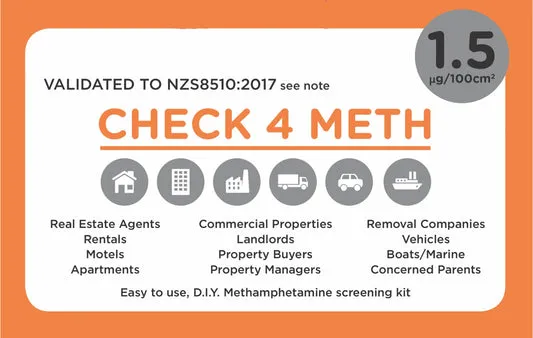
Check4Meth products are offered at several screening levels, including 1.5, 5, 10 and 15 micrograms per 100 square centimetres. These numbers represent different trigger levels. Choosing a kit should reflect the intended purpose, relevant regulations and the manufacturer’s approved use.
Someone researching a meth test kit for landlords nz should not select the lowest number merely because it sounds safest. A result must be interpreted against the appropriate framework. Confirm whether the chosen screening method is validated for the legal purpose before relying on it.
Respect Tenants During Property Access
Testing during an existing tenancy involves more than collecting a sample. Landlords need to meet entry notice requirements and handle findings with care. Privacy, accurate records and communication are important because an allegation of contamination can have serious consequences.
The rules also include requirements to share relevant test results with tenants. Keep a record of when testing occurred, which method was used and what information was provided. Avoid treating an unconfirmed indication as proof of a particular person’s conduct.
Build a Documented Response Process
A written procedure can stop an uncertain result from becoming an improvised decision. Before collecting samples, establish who will carry out the work and how unexpected findings will be handled.
Useful preparation steps include:
-
Confirm the reason for testing and any legal requirements.
-
Check that the screening method is validated and suitable.
-
Record sampling locations and follow device instructions.
-
Keep results and communications securely documented.
-
Arrange qualified detailed testing when legally required.
These steps help clarify responsibilities without claiming that a retail kit replaces professional assessment.
Understand What Happens After a Result
Under the 2026 regulations, contamination above 15 micrograms per 100 square centimetres requires decontamination, while separate provisions address premises above the maximum inhabitable level. However, regulatory decisions depend on valid methods and the circumstances of the property.
If further testing is needed, use appropriately qualified professionals and follow official guidance. Remediation should not begin from guesswork or an unsupported interpretation of a screening swab. Post-remediation verification has its own requirements.
Avoid Unnecessary Conclusions
Methamphetamine contamination is a property condition requiring evidence, not a reason to make unsupported accusations. A careful landlord should distinguish suspected drug activity, detectable surface residue and legally established contamination.
Record facts rather than speculation. Where Police or council involvement is relevant, follow their guidance. A transparent approach helps protect the property while treating tenants fairly and avoiding decisions that may later be challenged.
Conclusion
Property meth screening can be useful when it forms part of a careful, lawful assessment. Choosing an approved method, following collection instructions and understanding the limits of initial results are essential. Landlords must also respect tenancy notice rules and arrange detailed professional testing when required. For New Zealand owners comparing screening products, directdrugtesting.co.nz provides information about Check4Meth kits and their available thresholds. The most reliable approach combines responsible screening with current official guidance rather than treating a quick result as a complete property diagnosis.
